
As interest in digital assets continues to grow, investors are increasingly looking for ways to gain exposure through regulated, transparent vehicles. Digital Asset Treasury Companies (DATs or DATCOs) are publicly traded firms that hold cryptocurrencies like Solana (SOL) on their balance sheets and give investors a way to participate in the crypto economy through traditional equity ownership.
But, given the many Solana uses already available to investors, what makes Solana DATs different from simply buying crypto on an exchange? The answer lies in regulation. DAT regulations create a framework designed to improve trust, oversight, and accountability—bringing institutional-grade protections to an asset class that has historically operated in regulatory gray areas.
DAT regulations encompass several key areas that are designed to protect investors and ensure responsible treasury management. These typically include asset custody standards, transparency and reporting requirements, risk management protocols, and capital controls.
These protections are especially relevant for treasury-heavy crypto strategies, where large concentrations of volatile digital assets make proper custody, disclosure, and risk management even more important. However, it's important to understand how DAT regulations differ from other regulatory frameworks in the digital asset space.
Because DATs operate as publicly traded companies, they fall under SEC and FINRA oversight. This means they must comply with federal securities laws, file regular disclosures, maintain audited financial statements, and follow strict corporate governance requirements. Unlike a crypto exchange or a stablecoin issuer, a DAT’s primary regulatory guidelines come from being a public company, not from the specific nature of its digital asset holdings.
For DATs listed on major exchanges like NYSE or Nasdaq, there's an additional layer of compliance. Both exchanges have established corporate governance standards that listed companies must follow.
These standards aim to bolster public confidence, promote prompt disclosure of material events, and enhance corporate ethics. Compliance with these governance standards is an ongoing condition for maintaining a listing.
Here's how DAT regulations compare to other digital asset regulatory frameworks:
This layered approach means that Solana-based DATs must work within the guidelines of multiple regulatory frameworks at the same time. We believe this ultimately provides stronger protection for investors compared to unregulated crypto investment vehicles.
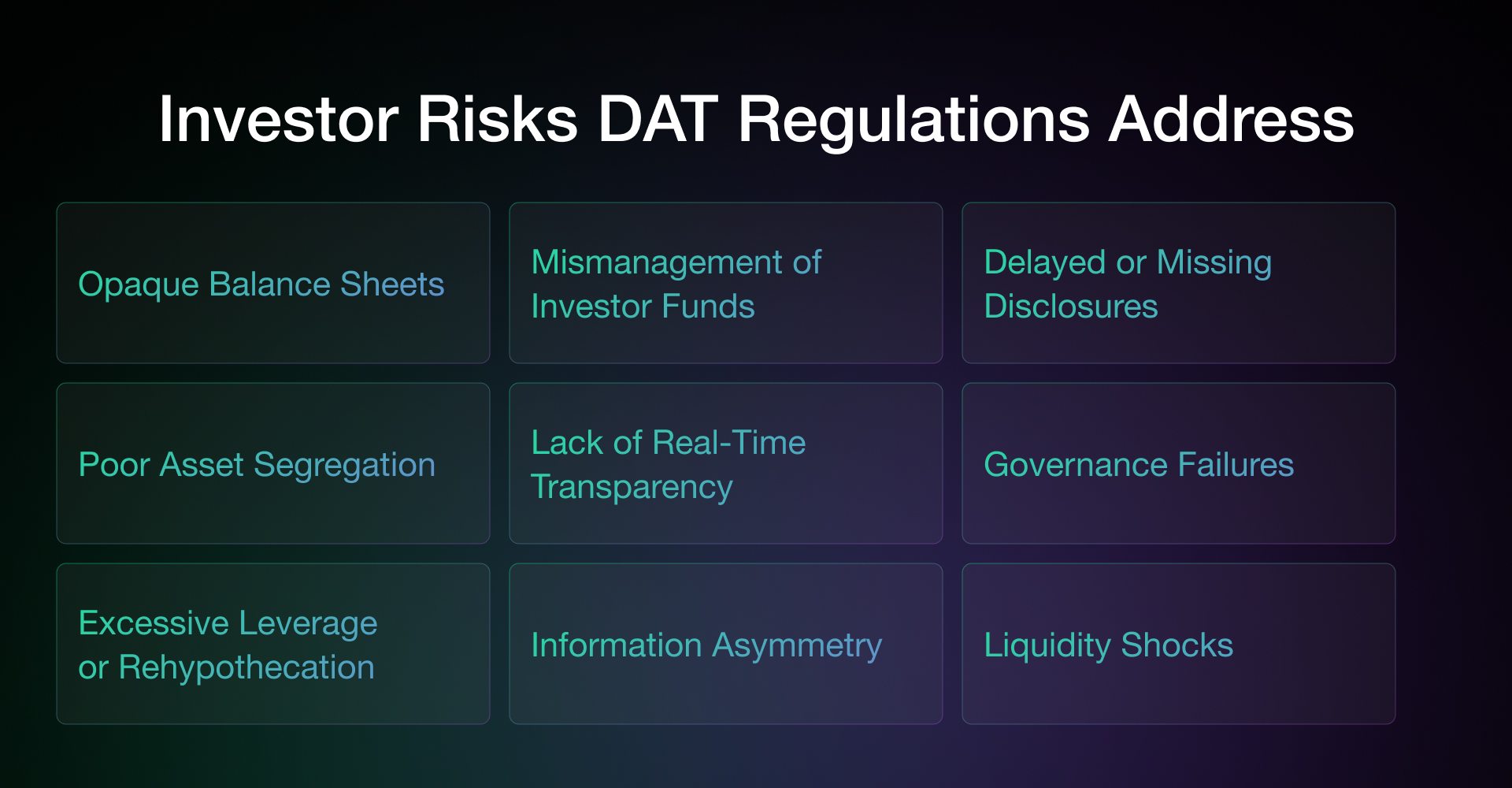
The regulatory framework surrounding DATs exists specifically to address risks that have plagued investors in the broader crypto space. Here's a look at the key risks and how regulations help mitigate them:
One of the most powerful protections for investors in Solana-based DATs comes from the blockchain itself. Solana operates as a public, transparent ledger where anyone can see and validate the authenticity of transactions and data on the network. This creates a level of real-time visibility that traditional financial systems sometimes struggle to match.
On a public blockchain, every transaction is recorded on a shared ledger. Investors and auditors can trace treasury inflows and outflows, verify asset holdings, and confirm that funds are being managed as disclosed. This on-chain transparency helps reduce fraud risk, insider misuse, and misrepresentation to investors.
The alignment between DAT disclosure requirements and Solana's open ledger model is particularly powerful. While traditional public companies report their financials quarterly, Solana-based DATs can offer near-real-time verification of their treasury positions. We believe this represents a significant evolution in how investors can monitor and trust the companies they invest in.
Solana-based DATs operate under multiple layers of regulatory oversight. Beyond standard DAT regulations, these companies must also operate within Solana's protocol rules—using valid programs, respecting account and staking mechanics, and managing transactions according to network constraints. Treasury policies need to account for network-level risks such as validator set health, client diversity, and on-chain program security when deploying capital.
Best practices for Solana DATs include partnering with qualified custodians who utilize multi-signature wallets. Multi-sig wallets require multiple signatures to authorize transactions. This setup aims to remove single points of failure, making it well-suited for institutions managing large amounts of cryptocurrency assets.
Broker-dealers that facilitate trades in DAT shares must comply with FINRA (Financial Industry Regulatory Authority) rules governing fair dealing, suitability, and best execution. This means transactions in Solana-based DAT shares are subject to the same market conduct standards that apply to traditional equity trades—rules designed to promote fair pricing, appropriate recommendations, and orderly markets.
For companies like HSDT (Solana Company) that are listed on Nasdaq, there's an additional layer of accountability. These DATs operate as fully compliant public companies, complete with SEC filings, audited balance sheets, and transparent reporting frameworks.
The operation behind DATs is fairly simple, though the oversight and regulations are anything but. The main operative goal of DATs is to purchase the digital asset with the goal of increasing asset per share. This is done by issuing shares and debt so each share represents more of the digital asset exposure over time. This is measured by taking total assets held and dividing them by the number of shares outstanding. This can be a lucrative opportunity in specific protocols like Solana and Ethereum, where you can contribute to the ecosystem with your tokens to earn yield.
Recent regulatory developments have further supported digital asset adoption, including FASB's fair value accounting rules for digital assets that took effect in January 2025, which simplify treasury management and financial reporting.
This combination of traditional securities regulation, exchange listing requirements, network protocol compliance, and custodial best practices creates what we believe is a comprehensive protection framework for investors seeking regulated digital asset exposure.
A Solana DAT (Digital Asset Treasury) is a publicly traded company that holds Solana (SOL) tokens on its balance sheet as a core treasury strategy. These companies offer investors a way to gain exposure to Solana through traditional equity ownership rather than directly purchasing and holding cryptocurrency. Solana's high throughput, competitive staking yields, and robust ecosystem make it an attractive choice for digital treasury companies seeking productive blockchain assets.
Solana-based DATs are structured as publicly traded corporations subject to SEC registration and reporting requirements. They must file regular disclosures, maintain audited financial statements, and comply with corporate governance standards. Many partner with qualified custodians designed to support proper asset segregation and security. We believe this structure provides investors with regulatory protections similar to those available in traditional equity investments.
Yes, investors in Solana-based DATs receive protections under traditional securities laws because they own equity in a publicly traded company. This includes access to audited financials, material event disclosures, and corporate governance protections. However, we believe it's important to note that the underlying Solana tokens held by the DAT may not be covered by the same protections as traditional securities, and DAT shareholders cannot directly redeem their shares for the company's SOL holdings.
This blog is for informational purposes only and does not contain all information pertinent to an investment decision. Nothing in this blog constitutes an investment recommendation or an offer of investment advisory services. This blog cannot be relied upon in making an investment decision. Nothing contained herein constitutes an offer to sell, or a solicitation to buy, any securities. This blog contains information Pantera believes to be reliable, and has been obtained from sources believed to be reliable, but Pantera makes no representation or warranty (express or implied) of any nature, nor accepts any responsibility or liability of any kind, with respect to the fairness, accuracy, completeness, or reasonableness of the information or opinions contained herein. Analyses and opinions contained herein (including market commentary, statements or forecasts) reflect the judgment of Pantera as of the date this blog was published, and may contain elements of subjectivity (including certain assumptions) or be based on incomplete information.







© 2025 solana company. All Rights Reserved.
.svg)